MONTREUX SOUNDS
A house founded by Claude Nobs
In 1967, Claude Nobs, then working for the Montreux Tourist Office, conceived and created the Montreux Jazz Festival, which he co-founded with Géo Voumard and René Langel, and which he led as Founder and Artistic Director throughout 46 editions. From the very first edition he wanted the music to outlive the night: concerts were filmed with Swiss Television and recorded. In 1973 he founded Montreux Sounds, the company through which, for forty years, he would programme the Festival, record it and, in time, preserve it. That same year, he took the helm of WEA in Switzerland, later Warner Music Switzerland. In 1988, Thierry Amsallem, his partner since 1986, became an equal co-owner of Montreux Sounds. Claude Nobs chaired the company until his death on 10 January 2013. His role at WEA, then Warner, gave him a unique position: at once artistic director of a festival, counterpart of the major international labels, host to the artists and producer of an audiovisual archive that has become heritage.
The artistic direction of the Festival
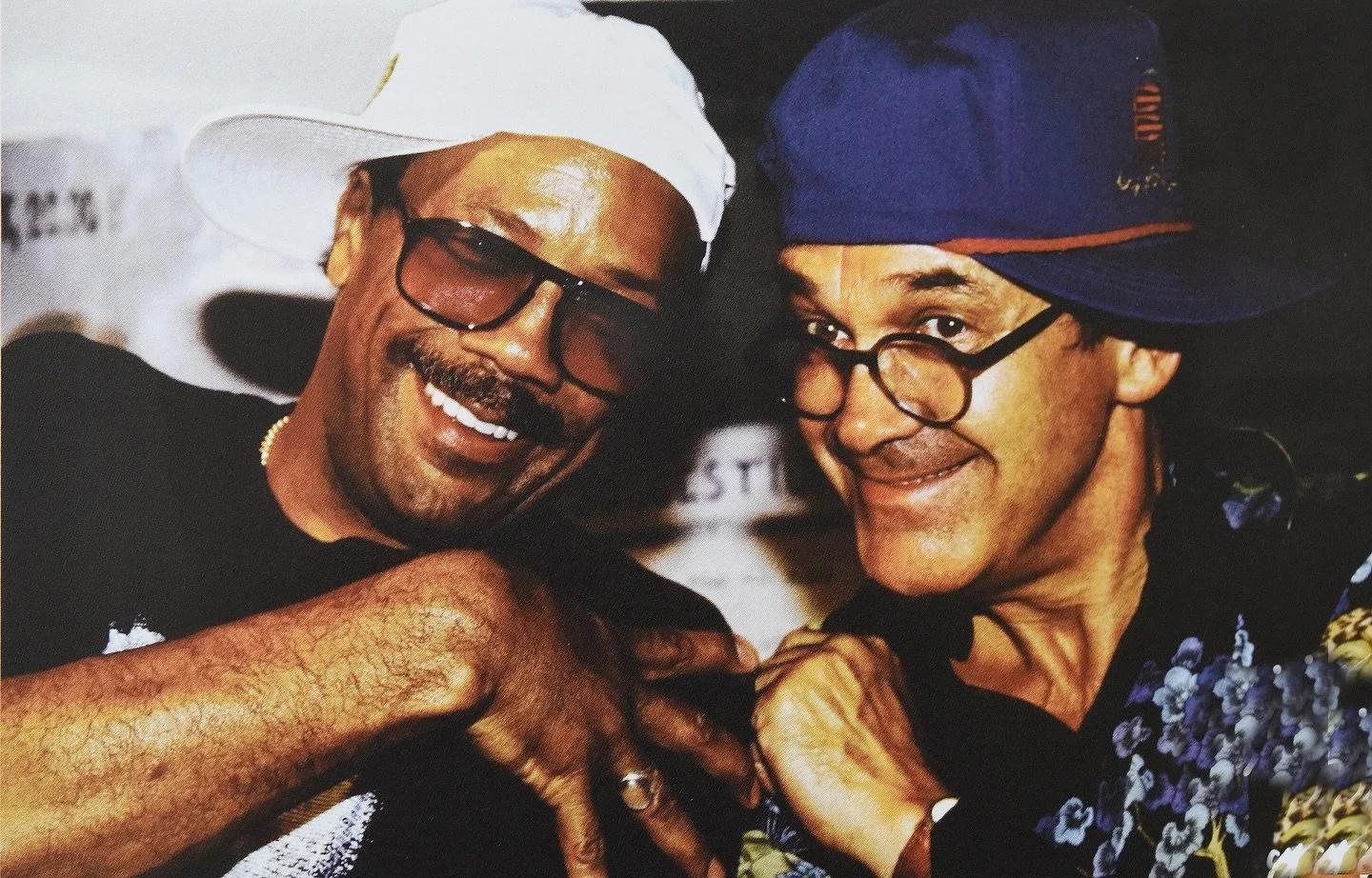
The Festival did not programme itself. Its line-up was the personal work of Claude Nobs, carried out through Montreux Sounds. The agreements signed with the Montreux Tourist Office entrust Montreux Sounds and its president with setting the artistic programme and running it on stage, meeting artists and their managers on prospecting trips, negotiating and engaging them, and caring for the Festival's image in Switzerland and abroad. They also entrust him with defining, in agreement with the Tourist Office, the concept of the Montreux festivals held abroad and, between 1991 and 1993, the co-production of the Festival with Quincy Jones.
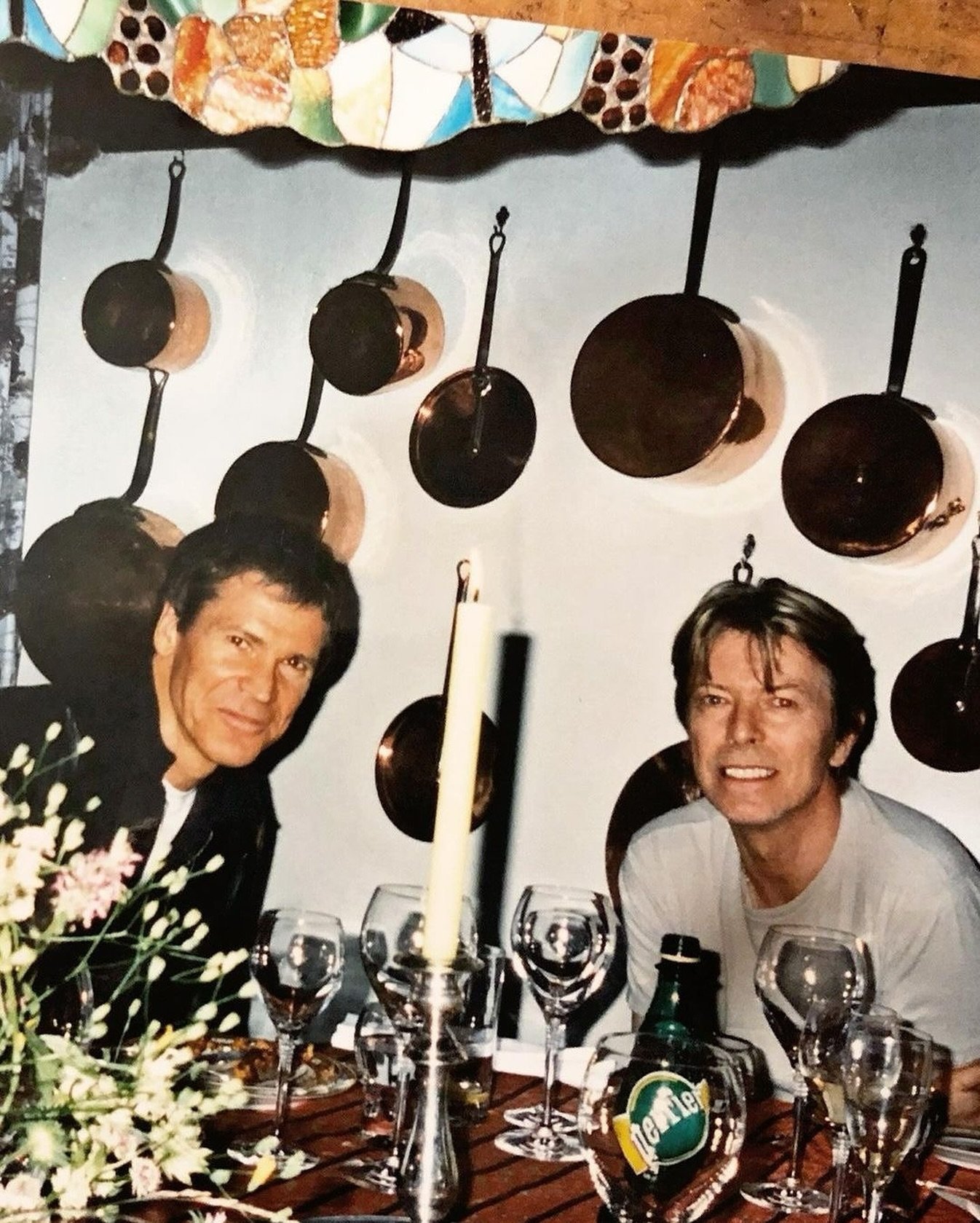
Hospitality was part of the method. From 1982, artists were received at Le Picotin, Claude Nobs' chalet in Caux, later joined by Le Grillon. Some 10,000 musicians and 100,000 guests (partners, record companies, journalists, researchers) have since been welcomed at the Claude Nobs Chalets, hosted by Thierry Amsallem from 1987 and, since 2013, together with Simon Lepêtre.
Recording every concert
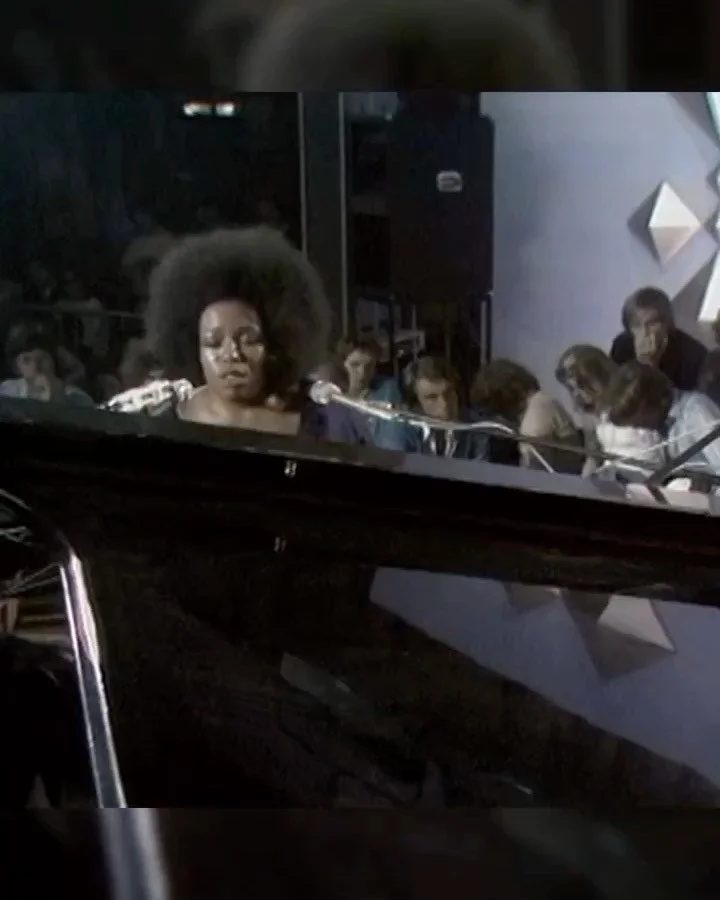
From 1969, Claude Nobs recorded every concert and offered the tapes to the artists and their labels. The live albums from Montreux of the 1970s, such as Bill Evans' Montreux II, Montreux Alexander or Elis Regina's Montreux recording, were born of this system, conceived, financed and operated by him, then by Montreux Sounds from 1974. In 1973, multitrack recording on 2-inch tape was introduced.
Several albums born of the Montreux recordings went on to win Grammy Awards, among them Bill Evans at the Montreux Jazz Festival, Ella Fitzgerald's Digital III at Montreux and Miles & Quincy Live at Montreux. These albums belong to their labels. They were born on the Montreux stage, in a line-up curated by Claude Nobs.
Beyond the Festival, Claude Nobs organised the music productions of the Golden Rose of Montreux (until 1978) and of Super Pop Montreux. Montreux Sounds later bought back the co-production shares of these recordings.
A catalogue built with the artists
Montreux Sounds holds the producer's rights in the audiovisual recordings of the Festival: jointly with RTS until 1986, alone from 1987 to 2012, and jointly with the Fondation du Festival de Jazz de Montreux for 2013. It does not hold the rights of the artists or of their record companies, and every release requires their agreement. Respect for this rule has earned Montreux Sounds the trust of artists and of the music industry for half a century.
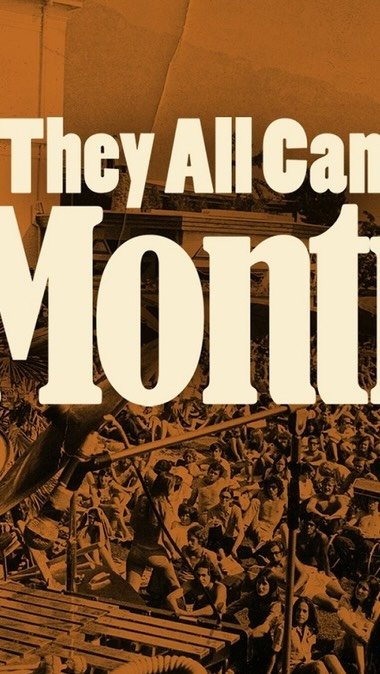
Recordings from Montreux have been licensed to Warner Music, Atlantic Records, Sony Music, Blue Note, Verve, Prestige and many other labels, to documentary makers, to broadcasters and to streaming platforms. Thousands of television and radio broadcasts have followed since 1967. In 2004, the Live at Montreux series was launched with Eagle Vision, bringing some 150 concerts to DVD and Blu-ray, then online; since 2012 Eagle Rock, now Mercury Studios, has been the exclusive licensee of a large part of the catalogue. In 2022, Montreux Sounds co-presented, with BMG Films, Beyond TNC and RTS, Oliver Murray’s documentary series They All Came Out to Montreux, built largely from previously unseen footage from its archives and those of RTS.
In all, more than 500 recordings have been released with the artists, with some 20 million physical copies sold, more than 500 million audio streams and around two billion views on YouTube, more than 70 million of them for B.B. King's Live at Montreux. The history of these years is told in Live! from Montreux, published in 2007 in four volumes.
Technology and innovation
Montreux has always been a stage for new ways of capturing music. Montreux Sounds introduced multitrack audio recording in 1973. In 1991, Claude Nobs had the Festival filmed in high-definition television, together with the Montreux Tourist Office and Sony, through Mr Sakai. Digital audio production followed in 2002, 3D in 2010 and 4K in 2012. Thierry Amsallem, at the crossroads of music and technology since 1987, created the Festival's website in 1994, one of the first music websites in the world, and in 1997 produced the first music DVD in Europe, with Atlantic Records.
Preservation, science and UNESCO
From 1988, Claude Nobs and Thierry Amsallem sought out, recovered and brought together all the recorded material, scattered across broadcasters, studios and tape stores. In 1993, the Festival's mandate formally named them jointly responsible for the conservation of the audiovisual archive. Since 1987, Montreux Sounds has devoted considerable financial and human resources to this task. The Collection comprises more than 11,000 hours of video and 6,000 hours of audio, on some 14,000 tapes.
In 2007, Claude Nobs, Thierry Amsallem and Patrick Aebischer, then President of EPFL, launched the EPFL-Montreux Sounds Digital Project to digitise the Collection in high resolution. The first petabyte of digitised archive was reached in 2010. Since 2016, the Claude Nobs Foundation has carried the work forward within the Montreux Jazz Digital Project, led by the EPFL Cultural Heritage & Innovation Center. The Collection has become a research platform for acoustics, data science, musicology, museology and neuroscience. In 2017, Smoke on the Water by Deep Purple and Tutu by Miles Davis, both recorded at Montreux, were among the first uncompressed audio recordings ever stored in DNA.
Quincy Jones described the Collection as "the most important testimonial to the history of music, covering jazz, blues and rock" (Montreux, 2008).
UNESCO Memory of the World. In June 2013, the Claude Nobs Collection of the Montreux Jazz Festival (1967-2013) was inscribed on the UNESCO Memory of the World Register under the title "The Montreux Jazz Festival, Claude Nobs' Legacy". The inscription is held by the Claude Nobs Foundation, a public-interest foundation created by Thierry Amsallem in 2013. www.claudenobsfoundation.com
The Claude Nobs Chalets
Le Picotin and Le Grillon, in Caux above Lake Geneva, are the home of Montreux Sounds and of the Claude Nobs Foundation. Montreux Sounds hosted the Festival’s receptions there until 2018 and welcomes artists, researchers and private guests throughout the year.
Montreux Sounds today
Chaired since 2013 by Thierry Amsallem, with Simon Lepêtre as Assistant to the CEO, Montreux Sounds is an independent company. It licenses the Claude Nobs Collection of the Montreux Jazz Festival to artists and their estates, record companies, broadcasters, producers, directors, documentary makers and journalists, and to cultural and educational institutions, in the spirit in which Claude Nobs built it: with the artists, and for them.